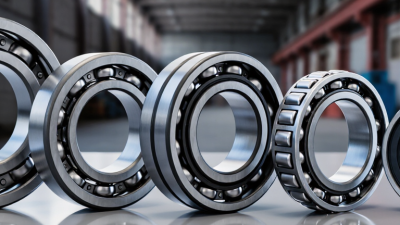
2026 Best Radial Deep Groove Ball Bearing Buying Guide?

Choosing the 2026 Best Radial Deep Groove Ball Bearing requires more than comparing prices or browsing attractive product pages. A bearing may look identical to another, yet differ in load capacity, sealing quality, steel hardness, noise level, and service life. This guide explains how to examine those details with practical judgment.

The Radial Deep Groove Ball Bearing remains a common choice for motors, pumps, conveyors, fans, and compact machinery. Its deep raceway supports radial loads and moderate axial loads. However, operating conditions decide whether it performs reliably. Check the dynamic load rating, limiting speed, internal clearance, lubricant type, and seal design. A rubber-sealed bearing may protect against dust and moisture, while an open bearing may suit clean, oil-lubricated equipment. Small details matter.

Real maintenance experience also shows that installation quality can change the result. A clean shaft, correct fit, proper alignment, and controlled pressing force reduce early damage. ISO 281 life calculations provide useful guidance, but they cannot predict every vibration pattern or contamination problem. No bearing is perfect. A polished specification sheet can still hide incomplete information, unclear origin, or inconsistent quality control.

This buying guide compares trusted manufacturers, material options, precision grades, sealing systems, and application requirements. It also considers total cost, not only the purchase price. Replacing a low-cost bearing twice may cost more than selecting a dependable model once. Verify dimensions and supplier documentation carefully. When evidence is limited, cautious selection is wiser than confident guessing.
2026 Best Radial Deep Groove Ball Bearing Buying Guide?

What Is a Radial Deep Groove Ball Bearing?

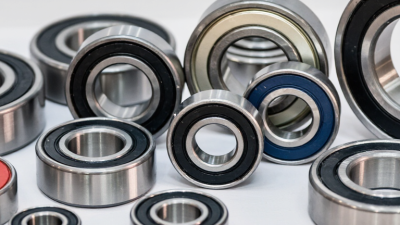
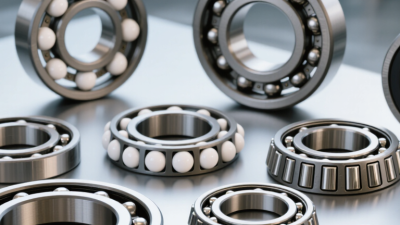
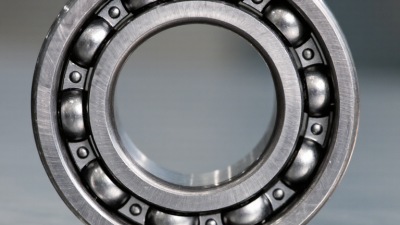
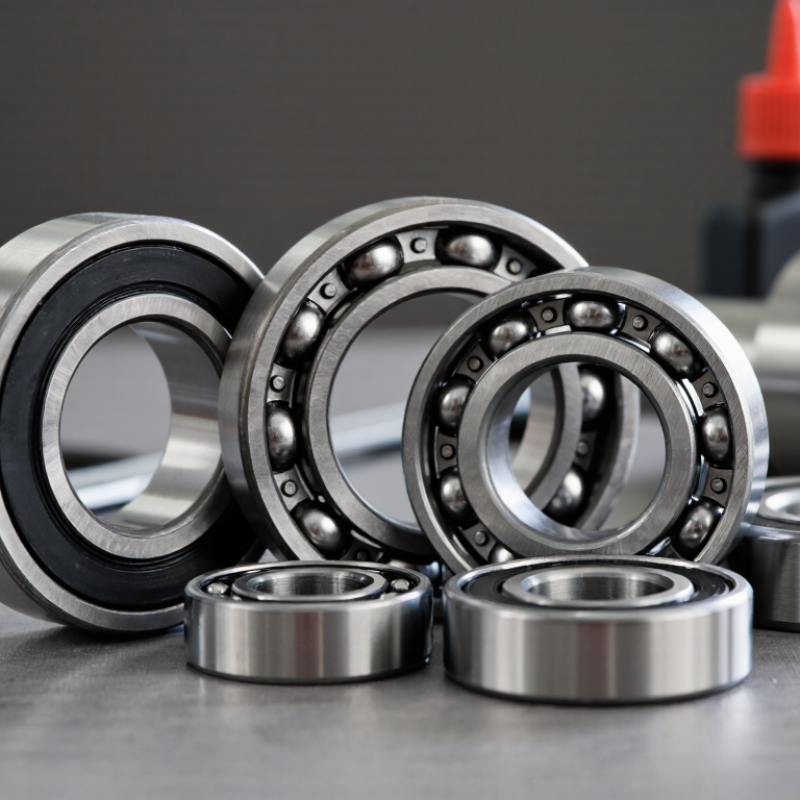
A radial deep groove ball bearing supports rotating shafts with low friction and steady alignment. Its inner ring fits the shaft, while its outer ring sits inside a housing. Hardened balls run between two continuous raceways. A cage keeps each ball evenly spaced during rotation. The design mainly handles radial loads, such as pulley weight or belt tension. It can also accept moderate axial loads from either direction.

In practical equipment, this bearing appears in motors, fans, pumps, conveyors, and household machines. A sealed version helps retain grease and blocks dust near the raceway. An open version allows easier relubrication but needs cleaner surroundings. During inspection, listen for grinding, feel for rough rotation, and check unusual heat. Smooth is not enough. A quiet bearing can still have internal damage.

Choosing the correct bearing requires more than matching shaft diameter. Check load, speed, operating temperature, housing fit, internal clearance, and moisture exposure. Excessive tightness may create heat, while excessive looseness can cause vibration. Clean installation matters too; a small metal chip can shorten service life. In my experience, many failures begin with poor alignment or over-tightened seals. Yet diagnosis is not always certain. Noise may come from the shaft, housing, or lubricant instead. A careful inspection prevents an expensive guess.

2026 Best Radial Deep Groove Ball Bearing Buying Guide

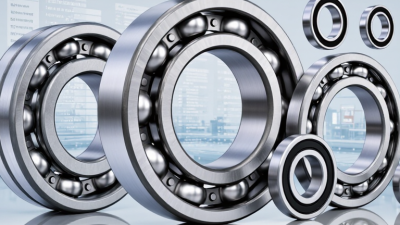
A radial deep groove ball bearing is a rolling-element bearing designed primarily to support radial loads, while also carrying moderate axial loads in both directions. The 6000 series is widely used because of its simple structure, low friction, and broad size range.

The chart shows nominal bore diameter, outside diameter, and bearing width for common metric 6000-series deep groove ball bearings. These boundary dimensions are standardized values; confirm load rating, clearance, sealing type, speed limit, and material requirements before purchasing.

How to Choose the Right Bearing Size and Load Capacity

2026 Best Radial Deep Groove Ball Bearing Buying Guide?

How to Choose the Right Bearing Size and Load Capacity

Choosing a radial deep groove ball bearing starts with accurate measurements. Measure the shaft diameter, housing bore, and available width. A caliper helps, but it can hide small errors. Check the equipment drawing whenever possible. Bearing dimensions must match both the shaft and housing. Write it down.

Load capacity requires more than guessing the machine’s weight. Estimate the radial load, axial load, speed, and operating hours. The dynamic load rating shows how much repeated load the bearing can handle. Compare it with the calculated equivalent load, not only the maximum force. For stationary or shock-loaded equipment, check the static load rating too. Sudden impacts can create dents before visible wear appears.

I once selected a bearing by bore size alone. It fitted perfectly, yet ran hot under continuous load. That mistake changed my inspection routine. I now check speed limits, lubrication, temperature, sealing, and contamination before ordering. Use a suitable service factor for vibration or frequent starts. Keep some capacity margin, but avoid unnecessary oversizing. A larger bearing may increase friction, weight, and cost. Fit also matters: a loose shaft can creep, while an overly tight fit can reduce internal clearance. Measure the actual shaft after machining. Then verify the bearing’s clearance and load ratings against the real operating conditions.

2026 Best Radial Deep Groove Ball Bearing Buying Guide? - How to Choose the Right Bearing Size and Load Capacity

Use the table below to compare common single-row radial deep groove ball bearing sizes. Bore, outside diameter, and width are standardized boundary dimensions for common 6000, 6200, and 6300 series bearings. Dynamic and static load ratings are representative engineering values in kilonewtons and may vary according to internal design, clearance, sealing arrangement, material, and manufacturing specification.

Common Radial Deep Groove Ball Bearing Size and Load Capacity Reference
Bearing Series Typical Application Profile Bore Diameter
(d, mm)
Outside Diameter
(D, mm)
Width
(B, mm)
Typical Dynamic Load Rating
(C, kN)
Typical Static Load Rating
(C0, kN)
Relative Load Capacity Selection Guidance
6000 Compact, low-friction assemblies with limited radial space 10 26 8 4.5–4.6 1.9–2.0 Light Choose when housing space and low starting torque are more important than maximum load capacity.
6001 Compact general-purpose rotating equipment 12 28 8 5.0–5.2 2.3–2.4 Light Suitable for small motors, fans, rollers, and instruments with moderate radial loads.
6002 Compact equipment with slightly higher radial demand 15 32 9 5.8–6.0 2.8–3.0 Light to moderate Good choice where a 15 mm shaft is required without using a wider bearing series.
6003 Compact machinery with moderate speed and load 17 35 10 6.7–6.9 3.2–3.4 Moderate Verify shaft fit and housing shoulder dimensions when replacing a bearing in a confined assembly.
6004 Compact industrial mechanisms and small drive systems 20 42 12 9.5–10.2 4.8–5.2 Moderate Use when a 20 mm shaft is needed and the available radial envelope is limited.
6200 General-purpose machinery with balanced size and capacity 10 30 9 5.0–5.2 2.3–2.5 Moderate Often preferred over the 6000 series when the housing can accept a larger outside diameter.
6201 Small motors, pumps, fans, and conveyor components 12 32 10 6.7–6.9 3.0–3.2 Moderate Choose for a 12 mm shaft when higher load capacity is needed than a compact 6001 bearing provides.
6202 Medium-duty rotating assemblies 15 35 11 7.4–7.8 3.6–3.9 Moderate A practical general-purpose option for moderate radial and limited axial loads.
6203 Motors, gearboxes, pumps, and industrial rollers 17 40 12 9.2–9.8 4.5–5.0 Moderate to high Use where the 17 mm shaft and moderate housing diameter provide a good space-to-capacity balance.
6204 Industrial drives and medium-duty machinery 20 47 14 12.0–13.2 6.2–6.8 High A common selection for 20 mm shafts where radial load capacity is more important than compactness.
6205 Medium-duty motors, conveyors, and transmission systems 25 52 15 13.5–14.5 7.4–8.0 High Suitable for a 25 mm shaft when the application requires a widely available, balanced bearing size.
6206 Higher-load industrial equipment 30 62 16 18.5–20.0 10.5–11.5 High Choose when the 30 mm shaft and larger housing envelope are acceptable for increased capacity.
6300 Heavy-duty radial applications with a compact bore 10 35 11 7.8–8.4 3.3–3.6 Moderate to high Provides more load capacity than a 6000 or 6200 bearing with the same 10 mm bore.
6301 Heavy-duty small-shaft machinery 12 37 12 9.3–10.0 4.0–4.4 High Select when radial load is high and a 12 mm shaft must be retained.
6302 Heavy-duty motors, pumps, and industrial mechanisms 15 42 13 10.8–11.8 5.1–5.7 High Use when a 15 mm bore is required and the application has substantial radial loading.
6303 High-load industrial rotating equipment 17 47 14 12.8–14.0 6.2–6.8 High Offers greater radial capacity than 6203 while retaining the same 17 mm bore.
6304 Heavy-duty drives and machinery 20 52 15 15.0–16.5 7.3–8.2 Very high Choose for demanding radial loads when a 20 mm shaft and larger bearing envelope are available.
6305 Heavy-duty conveyors, gearboxes, and industrial drives 25 62 17 22.0–24.5 11.0–12.5 Very high Use for higher radial loads than the 6205 where the 25 mm bore is retained.
6306 High-load industrial machinery and large drive systems 30 72 19 28.0–31.0 15.0–17.0 Very high Select only after checking housing strength, shaft deflection, lubrication, speed, and mounting conditions.
Bearing Selection Checklist
Selection Factor What to Check Practical Recommendation
Shaft Fit Measure the shaft diameter, roundness, surface finish, and shoulder location. Match the bearing bore to the shaft and use the correct fit for rotating loads. Avoid forcing a bearing onto an undersized or damaged shaft.
Housing Envelope Check housing bore, available width, shoulder diameter, and adjacent component clearance. Confirm all three boundary dimensions: bore diameter, outside diameter, and bearing width.
Radial Load Calculate the combined operating radial force, including belt tension, gear force, weight, and shock. Use a higher-capacity 6200 or 6300 series when the compact 6000 series does not provide sufficient load margin.
Axial Load Determine the direction, magnitude, and frequency of thrust loading. Deep groove ball bearings can carry limited axial load, but substantial or continuous thrust may require a different bearing arrangement.
Speed Compare the required operating speed with the bearing's limiting speed for its seal, cage, grease, and clearance configuration. For high-speed operation, prioritize correct lubrication, balance, internal clearance, and low-friction seals.
Static Safety Consider shock loads, vibration, standstill loads, and peak forces. Do not size only from average operating load; check the static load rating against the highest expected load.
Sealing and Contamination Identify dust, moisture, washdown, abrasive particles, and operating temperature. Choose shields or contact seals according to contamination and friction requirements, and confirm the grease temperature range.
Service Life Use equivalent dynamic load, rotational speed, lubrication, alignment, and contamination level in the life calculation. For ball bearings, basic rating life is commonly evaluated using L10 = (C/P)3 million revolutions, subject to proper application assumptions.

Important: The load ratings shown are representative ranges for standard single-row radial deep groove ball bearings and are provided for preliminary sizing only. Final selection should be based on the exact manufacturer's catalog rating, operating temperature, lubrication, speed, mounting fit, alignment, contamination, shock loading, and required service life.

Which Materials, Seals, and Lubricants Suit Your Application?

2026 Best Radial Deep Groove Ball Bearing Buying Guide: Which Materials, Seals, and Lubricants Suit Your Application?

Material selection should follow the machine’s actual environment, not a catalog habit. Hardened chrome steel suits most clean, moderate-temperature equipment and offers strong fatigue resistance. Stainless steel handles moisture better, but it usually carries lower load capacity. Hybrid ceramic bearings can reduce electrical damage and friction at high speed. However, ceramic rolling elements are costly and less forgiving of impact. In a dusty packaging line, I would inspect washdown exposure, load changes, and shaft alignment before choosing.

Seals control contamination and friction. Open bearings support easy relubrication but need a clean housing. Metal shields reduce dust entry with minimal drag. Contact seals provide stronger protection against water and fine particles, though their rubbing lips create heat. Noncontact seals run cooler, yet they cannot stop every contaminant. A seal that looks perfect on paper may fail when the shaft has poor finish or excessive runout.

Lubricant choice should match speed, temperature, load, and contamination. Grease is practical for many motors and conveyors because it stays in place. Oil can remove heat more effectively in high-speed systems. Use a viscosity that supports the load without creating unnecessary churning. Too much grease is a common mistake. The bearing may feel safe, then run hot. I have seen maintenance schedules copied from older equipment, even after operating conditions changed. Testing temperature, noise, and vibration during the first operating hours provides more reliable evidence than assumptions.

How to Compare Bearing Quality, Performance, and Service Life

Choosing the best radial deep groove ball bearing in 2026 requires more than a low price. Quality starts with steel cleanliness, accurate raceway geometry, and controlled heat treatment. Ask for load ratings, dimensional tolerances, internal clearance, and inspection records. A credible supplier should explain testing methods, not only publish attractive numbers. Check seals, cage material, and grease compatibility. Small details matter.

Performance appears under real operating conditions. Compare dynamic load capacity with the actual radial load, speed, temperature, and occasional shock. A high-speed bearing may struggle when grease cannot release heat. Listen for roughness at operating temperature, not only on a clean inspection bench. Measure vibration and temperature after installation, then record the readings. Misalignment, excessive fits, and contaminated grease can shorten service life dramatically. Installation is often the weak link.

Service life estimates should use realistic loads and duty cycles. Ask whether calculations include variable loads, starts, stops, moisture, and long idle periods. Sealed bearings may reduce maintenance, but seals can increase friction and heat. Open designs may last longer in clean housings. That depends on the environment. I have seen a smooth bearing fail early because the shaft fit was ignored. I have also trusted catalog figures too much. Recheck assumptions with field data, replacement intervals, and failure records. The best comparison combines laboratory evidence with real machine conditions.

What to Check Before Buying Radial Deep Groove Ball Bearings in 2026

2026 Best Radial Deep Groove Ball Bearing Buying Guide?

Before buying radial deep groove ball bearings in 2026, define the machine’s real working conditions. Check radial load, occasional axial load, operating speed, temperature, and shaft size. A bearing that fits perfectly may still fail under continuous vibration or poor alignment. Review the required clearance, sealing type, cage material, and lubrication range. Open bearings suit clean, serviceable systems, while sealed versions help resist dust and moisture. However, seals can increase friction and heat. That trade-off is easy to overlook.

I once treated a catalog rating as a guarantee. It was not. Dynamic load ratings support calculations, but actual life also depends on installation, cleanliness, lubrication, and shock loads. Compare the bearing’s dimensions with housing and shaft tolerances. Ask for inspection records, material information, manufacturing traceability, and relevant quality certificates. Measure noise or vibration when the application demands quiet operation. Do not rely only on a low price. It may hide inconsistent tolerances or limited technical support.

Tips: Confirm the exact part size. Check clearance before ordering. Choose seals for the environment, not habit. Keep mounting tools clean. Never press force through the rolling elements. Leave room for thermal expansion. If the duty cycle is uncertain, record speed and temperature during a trial run. That small test may reveal a wrong assumption before installation.