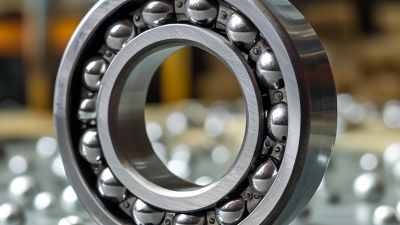
In 2026, global buyers need more than a familiar bearing catalogue. They need evidence that each Heavy Duty Ball Bearing can survive real operating conditions. A mining conveyor may face dust, shock loads, and continuous vibration. A steel mill may add extreme heat and difficult lubrication intervals. These details change the correct bearing choice.
Henry Timken, founder of The Timken Company, reportedly said, “The success of our business depends upon the quality of our products and the service we give our customers.” That principle still matters. Price alone cannot prove reliability. Buyers should examine dynamic load ratings, static load capacity, clearance, sealing performance, cage design, and traceable material quality. Supplier testing records also deserve close attention.
This guide reviews major Heavy Duty Ball Bearing types for international purchasing teams. It considers deep-groove, angular-contact, thrust, self-aligning, and specialized sealed designs. Each type offers a different balance of speed, load direction, misalignment tolerance, and maintenance demand. The best option is not always the largest one. Sometimes, a smaller bearing with correct preload performs better.
Real applications remain imperfect. Lubricant contamination may be underestimated. Installation errors may appear after months, not days. Even respected suppliers can provide unsuitable recommendations when operating data is incomplete. Buyers should therefore compare technical drawings, inspection reports, warranty terms, and replacement availability. A careful decision begins with measurable conditions, not marketing language.
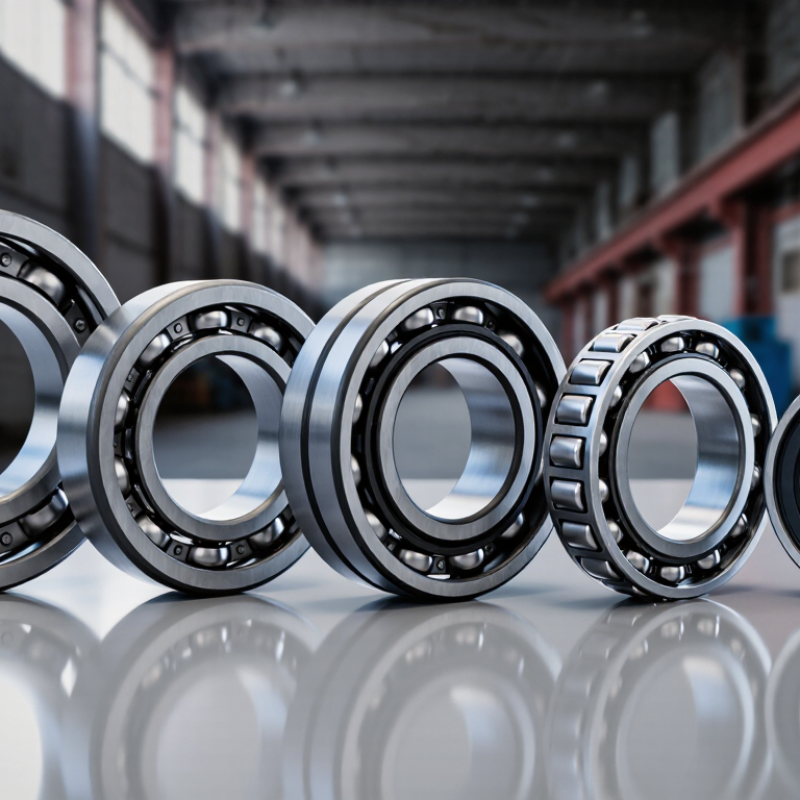
Heavy-Duty Ball Bearings: Definition, Structure, and Core Functions
Heavy-duty ball bearings are rolling-element components designed for demanding loads, vibration, and long operating cycles. They reduce friction between rotating and stationary machine parts. In practical use, they support shafts in conveyors, gearboxes, pumps, construction equipment, and industrial drives. They work quietly.
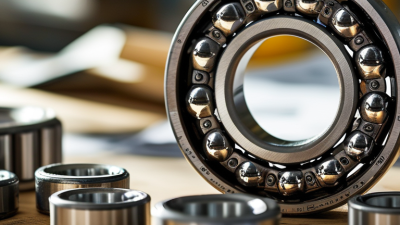
A typical bearing contains an inner ring, outer ring, rolling balls, and a cage. The inner ring fits around the shaft, while the outer ring sits inside the housing. Hardened steel or engineered ceramic materials may be selected for different speed, load, and temperature conditions. The cage separates each ball and controls its movement. Seals or shields help retain lubricant and limit dust entry. Small design details matter.
The core function is controlled load transfer. Radial loads act across the shaft, while axial loads act along it. Some bearing designs handle both, but capacity depends on contact angle, internal clearance, lubrication, and alignment. Proper preload can improve stiffness, yet excessive preload may create heat and early failure. This is where selection often becomes less simple than catalog figures suggest.
From field maintenance experience, noise, rising temperature, and unusual vibration often reveal poor installation before visible damage appears. Clean mounting tools, correct fits, and measured lubrication are essential. Over-lubrication is a common mistake. It can increase drag and operating temperature. Buyers should review load cycles, shaft speed, contamination, service temperature, and maintenance access rather than choosing only by size. Even a strong bearing can fail when housing alignment is ignored.
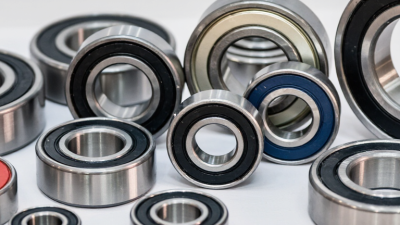
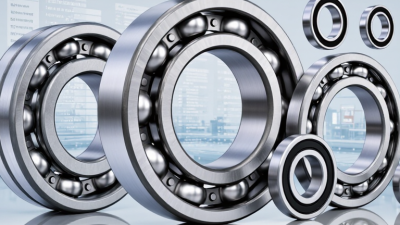
Heavy-duty ball bearings support industrial loads, but each type solves a different problem. Deep-groove ball bearings handle radial loads and moderate axial forces. They suit electric motors, conveyors, fans, and general machinery. Angular-contact ball bearings manage combined loads more effectively. Paired units can improve stiffness in pumps, compressors, and machine-tool spindles. Thrust ball bearings carry axial loads, but they dislike heavy shock and misalignment. Self-aligning ball bearings tolerate shaft deflection and housing errors. They are useful in long conveyor lines and agricultural equipment.
The U.S. Department of Energy reports that motor systems consume more than 70% of electricity used in American manufacturing. Poor bearing alignment can increase friction, heat, and downtime. Small details matter. ISO 281 defines basic rating life at 90% reliability, known as L10 life. Engineers should compare dynamic load rating, static load rating, speed, and operating temperature. A dusty conveyor may need sealed bearings and stronger contamination control. A high-speed spindle may require controlled preload and low-friction lubrication.
Selection is still imperfect. Catalog ratings rarely match dirty, vibrating workshops. Field experience should challenge the calculation. Check shaft fits, housing rigidity, grease quantity, and actual load cycles. A bearing with a higher capacity may fail sooner if lubrication is wrong. Regular vibration readings and temperature checks reveal early damage. The best type is not always the largest one.
Key Types of Heavy-Duty Bearings for Industrial Applications
Cylindrical and spherical roller bearings are widely selected for high radial loads. Tapered roller bearings support combined radial and axial loads, while angular-contact and thrust ball bearings are designed for applications where axial load capacity and directional control are important. The 1–5 scores represent comparative engineering characteristics rather than standardized load ratings; actual performance depends on bearing size, internal clearance, speed, lubrication, and operating conditions.
Heavy-duty ball bearings should be compared by working conditions, not catalog size alone.
Deep-groove types suit radial loads and moderate axial forces. Angular-contact designs handle combined loads at higher speeds. Double-row bearings provide greater radial capacity, but they may need more alignment control.
Check the dynamic load rating against the real load, shock, and operating hours. Static capacity matters when machinery starts, stops, or carries a sudden impact.
Speed ratings also require caution. Contact seals protect against dust and moisture, but they create more friction and heat. Shielded designs often run cooler, yet they offer less contamination protection.
In one workshop, a sealed bearing outlasted an open unit because fine metal dust entered the housing. Still, excessive seal drag reduced speed efficiency. The result was not perfect.
Tips: Compare calculated L10 life with field conditions, then add a practical safety margin. Inspect grease temperature, vibration, noise, and shaft fit during operation. A bearing rated for high speed may fail early under poor lubrication or misalignment. Service life also depends on cleanliness, mounting force, load direction, and storage. Do not rely on rating numbers alone. Test the actual assembly when failure costs are high.
Material selection sets the bearing’s working limits. Through-hardened bearing steel offers high fatigue strength and reliable dimensional stability. Stainless steel improves corrosion resistance, but it usually carries lower load capacity. Ceramic rolling elements reduce density and electrical damage risk. However, they cost more and can be less forgiving under impact loading. The choice must match speed, shock, moisture, and maintenance conditions.
Manufacturing accuracy matters as much as material grade. ISO 281:2007 links bearing life with dynamic load rating, applied load, and reliability factors. Small changes in raceway geometry can alter contact stress and noise. Precision grinding, controlled heat treatment, and clean assembly reduce these variations. A 2022 U.S. Department of Energy motor-system sourcebook identifies poor lubrication and contamination as major causes of rotating-equipment losses. Field experience supports that warning. Grease cannot rescue a contaminated raceway.
Seals deserve closer attention. A tighter seal may protect against dust, yet it can increase friction and operating temperature. Buyers should request hardness data, retained-austenite control, surface roughness, and traceable inspection records. ISO 76:2006 provides the basis for static load evaluation, especially where shock loads occur. Still, laboratory ratings can feel optimistic. Misalignment, fitting errors, and irregular relubrication often dominate real service life. That assumption needs testing. A practical trial under actual load may reveal more than a polished catalogue value.
2026 Top Heavy Duty Ball Bearing Types for Global Buyers
Selection Guide for Global Buyers: Standards, Suppliers, and Costs
Heavy-duty applications need more than a higher load rating. Deep-groove bearings suit radial loads and moderate axial loads. Angular-contact types handle combined loads at high speed. Thrust bearings manage axial force, while self-aligning designs tolerate shaft misalignment. ISO 281 supports dynamic load-life calculations. ISO 76 addresses static load ratings. ISO 492 defines dimensional and running accuracy. These standards make supplier quotations easier to compare across borders. MarketsandMarkets’ 2024 industrial bearings analysis projects growth from about USD 12 billion in 2024 to more than USD 16 billion by 2029. Demand is rising, but specification errors remain common.
Supplier evaluation should include ISO 9001 certification, heat-treatment records, material certificates, and batch traceability. Ask for vibration, clearance, hardness, and grease test results. A sealed bearing may reduce maintenance, yet its seal material must match temperature and chemicals. Pricing depends on steel grade, precision class, cage design, seals, order quantity, packaging, and freight. A low unit price can become expensive after premature replacement. I would not trust a catalogue number alone. Real shaft drawings and operating data matter more.
Tips: Request three comparable quotations. State ISO requirements clearly. Confirm delivery terms and replacement support. Order samples before committing to volume. Inspect the first shipment independently. It is slower. It is safer.
The comparison below summarizes common heavy-duty rolling-bearing configurations used in global industrial applications. Performance and pricing depend on size, internal clearance, load spectrum, lubrication, sealing, quantity, certification, and delivery terms.
| Bearing Type | Primary Load Capability | Typical Bore Range | Relative Speed Capability | Best-Fit Applications | Common Materials and Configurations | Relevant International Standards | Indicative Cost per Unit (USD) | Key Buying Checks |
|---|---|---|---|---|---|---|---|---|
| Deep-Groove Ball Bearing | Primarily radial loads; moderate axial loads in both directions. | 10–180 mm | High | Electric motors, pumps, gearboxes, conveyors, fans, general machinery. | Through-hardened bearing steel; open, shielded, or contact-sealed versions; standard or increased internal clearance. | ISO 15 for boundary dimensions; ISO 492 for tolerances; ISO 281 for rating life; ISO 683-17 for bearing steel requirements. | $3–$450 | Check radial load, axial load, operating temperature, contamination level, seal drag, clearance, and mounting fit. |
| Angular-Contact Ball Bearing | Combined radial and axial loads; axial capacity depends on contact angle and arrangement. | 10–180 mm | High | Machine-tool spindles, pumps, compressors, screw drives, precision gear systems. | High-quality bearing steel; single- or double-row designs; matched pairs in back-to-back, face-to-face, or tandem arrangements. | ISO 15; ISO 492; ISO 281; ISO 199 for static load ratings where applicable. | $8–$650 | Specify contact angle, preload, pair arrangement, axial direction, stiffness, limiting speed, and precision class. |
| Four-Point-Contact Ball Bearing | Radial loads plus axial loads in both directions; suitable for moment loading at moderate levels. | 20–240 mm | Medium | Robotic joints, indexing mechanisms, turntables, slewing mechanisms, compact gear systems. | Single-row split-inner-ring or four-point raceway design; open or sealed execution; bearing steel rings and balls. | ISO 15; ISO 492; ISO 281; ISO 199 for static load evaluation. | $25–$1,200 | Evaluate tilting moment, oscillating motion, raceway contact condition, clearance, mounting rigidity, and lubrication. |
| Self-Aligning Ball Bearing | Radial loads with limited axial loads; compensates for shaft or housing misalignment. | 10–100 mm | Medium–High | Long conveyor shafts, agricultural equipment, textile machinery, fans, and applications with flexible housings. | Double-row spherical outer raceway; cylindrical or tapered bore; open or sealed options. | ISO 15; ISO 492; ISO 281; ISO 199 for static capacity. | $7–$350 | Confirm allowable misalignment, shaft adapter requirements, axial movement, seal design, and housing accuracy. |
| Thrust Ball Bearing | Axial loads in one or both directions; limited radial-load capability. | 10–160 mm | Low–Medium | Vertical shafts, screw mechanisms, low-speed indexing systems, turntables, and axial positioning equipment. | Single-direction or double-direction design; flat or spherical housing washers; hardened bearing steel components. | ISO 15 for applicable dimensions; ISO 492; ISO 281; ISO 199 for static load ratings. | $5–$300 | Verify axial direction, minimum load, shaft and housing washer alignment, speed, lubrication, and radial-load restrictions. |
| Spherical Roller Bearing | Very high radial loads, substantial axial loads, and strong tolerance to misalignment. | 25–500 mm | Low–Medium | Mining conveyors, crushers, fans, paper machinery, gearboxes, steel-processing equipment. | Two rows of barrel-shaped rollers; brass, steel, or polymer cage options; cylindrical or tapered bore. | ISO 15; ISO 492; ISO 281; ISO 199; ISO 5753-1 for internal clearance. | $35–$3,500 | Check permissible misalignment, heavy-shock loading, minimum load, lubrication flow, cage material, and mounting method. |
| Cylindrical Roller Bearing | Very high radial loads; axial capacity depends on flange arrangement. | 20–400 mm | High | Electric motors, generators, gearboxes, traction equipment, industrial transmissions, and high-load machines. | One- or multi-row rollers; separable inner or outer ring in many designs; steel or brass cage options. | ISO 15; ISO 492; ISO 281; ISO 199; ISO 5753-1 for internal clearance. | $20–$2,400 | Specify axial-location function, flange design, thermal expansion, radial clearance, roller load distribution, and speed. |
| Tapered Roller Bearing | High combined radial and axial loads; supports substantial overturning moments. | 15–500 mm | Medium | Wheel hubs, industrial gearboxes, conveyors, construction equipment, reducers, and heavy vehicle systems. | Conical rollers and raceways; separable cone and cup; single-, paired-, or multi-row arrangements. | ISO 355 for boundary dimensions; ISO 492; ISO 281; ISO 199 for static load ratings. | $12–$2,800 | Determine preload or endplay, pair arrangement, axial load direction, mounting accuracy, heat generation, and relubrication method. |
| High-Capacity Full-Complement Ball Bearing | High radial load capacity for low-to-moderate speed operation; limited suitability for high-speed applications. | 20–160 mm | Low–Medium | Compact lifting equipment, low-speed gear drives, heavy indexing systems, and space-constrained machinery. | Maximum number of balls with no cage; open or sealed versions; hardened bearing steel rings and balls. | ISO 15; ISO 492; ISO 281; ISO 199. | $15–$700 | Check speed limits, ball-to-ball sliding, lubrication consistency, load direction, contamination protection, and thermal behavior. |