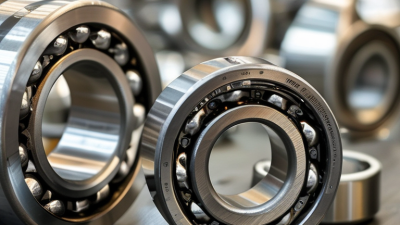
China has become a major sourcing base for Steel Ball Bearings, supported by extensive machining capacity, heat-treatment facilities, and export experience. Fortune Business Insights estimated the global ball bearing market at approximately USD 7.76 billion in 2023. Its report also projects continued growth through 2032, driven by automotive, industrial automation, and renewable-energy equipment. Mordor Intelligence reports similar expansion, although market figures vary because research firms define product categories differently.
For global buyers, “best” should mean verified performance, not only the lowest quotation. ISO 281 provides a recognized method for calculating bearing rating life, while ISO 492 defines dimensional and running accuracy classes. Reliable Chinese suppliers should identify bearing steel, commonly GCr15 or equivalent 100Cr6, and provide hardness, cleanliness, roundness, and noise-test records. A useful factory audit may include checking a 25.4 mm ball under magnification, reviewing batch traceability, and comparing vibration readings before shipment. Packaging also matters. Rust-inhibiting paper, sealed bags, and dry cartons can protect precision surfaces during long ocean transit.
Details matter greatly.
Buyer requirements should state load, speed, temperature, lubrication, clearance, and tolerance class. Certifications such as ISO 9001 can support process control, but they do not guarantee every batch is perfect. That is an important limitation. Independent sampling, incoming inspection, and a documented corrective-action process remain sensible safeguards. The World Bearing Association has repeatedly highlighted counterfeit and quality risks across international bearing supply chains. Therefore, selecting China’s top Steel Ball Bearings suppliers requires technical evidence, transparent communication, and realistic validation rather than promotional claims alone.
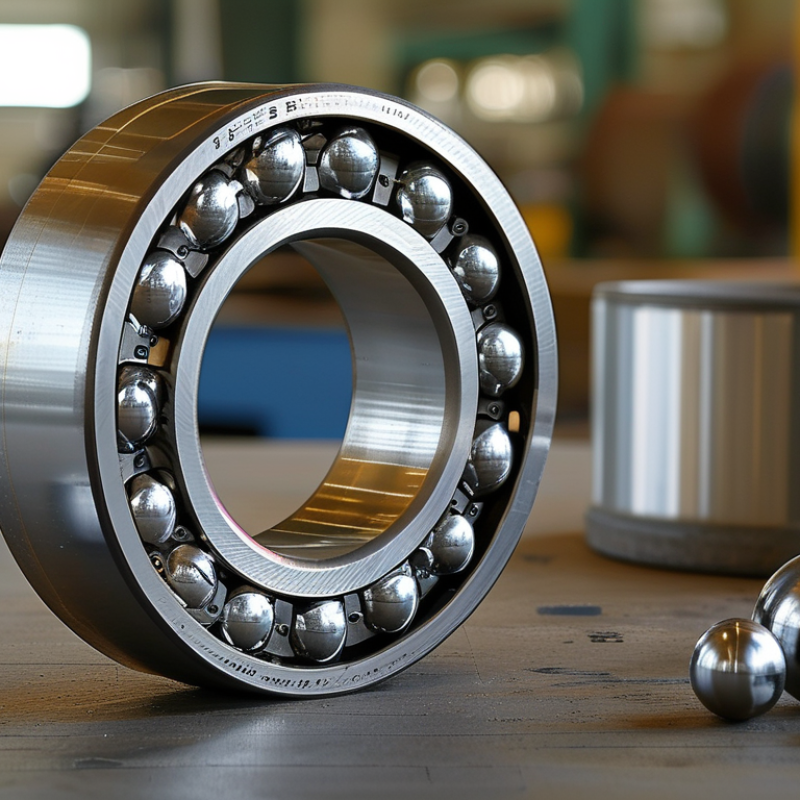
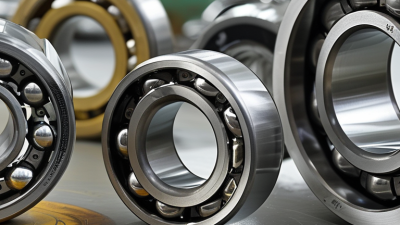
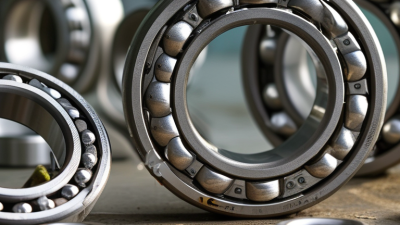
Steel ball bearings are rolling-element components that reduce friction between rotating and stationary parts. Hardened steel balls run between inner and outer raceways, while a cage maintains spacing. Their compact structure supports high speed, moderate radial loads, and reliable motion transfer.
Common types include deep-groove, angular-contact, thrust, and self-aligning ball bearings. Deep-groove bearings suit electric motors, pumps, conveyors, and fans. Angular-contact designs handle combined radial and axial loads in machine tools. Thrust bearings support axial force, such as in screw mechanisms. According to Fortune Business Insights’ 2024 Ball Bearing Market report, the global market was valued near USD 25 billion in 2023. Industrial automation and transport equipment remain major demand sources.
Selection requires more than matching bore size. Engineers should check load rating, speed, temperature, sealing, lubrication, and installation accuracy. ISO 281 provides methods for rating life calculations, but real factory conditions often differ from catalogue assumptions. Dust near a conveyor, misalignment inside a gearbox, or insufficient grease can shorten service life quickly. A common mistake is choosing the cheapest bearing. It may fit physically, yet fail earlier under shock loads. Buyers comparing Chinese suppliers should request material certificates, dimensional inspection records, heat-treatment details, and tested life data. Documentation matters. So does practical experience.
Steel ball bearings are rolling-element components that reduce friction and support radial or axial loads between moving parts. Common material types include chrome bearing steel, stainless steel, and carbon steel. The chart presents representative heat-treated hardness ranges used in engineering applications; actual values vary with grade, heat treatment, size, and operating conditions.
Chrome bearing steel is widely used in motors, pumps, gearboxes, and general machinery because of its high wear resistance. Stainless steel is preferred for food-processing, medical, marine, and chemically exposed equipment, while carbon steel is often selected for cost-sensitive applications with moderate loads and limited corrosion exposure.
China Best Steel Ball Bearings Suppliers for Global Buyers
When evaluating Chinese steel ball bearing manufacturers, quality begins with material control. Ask for mill certificates, heat numbers, and complete traceability records. Bearing steel should meet recognized requirements for chemistry, cleanliness, hardness, and heat treatment. ISO 3290 is useful when assessing ball dimensions, grades, and surface quality.
Production evidence matters more than polished brochures. Review inspection records for diameter variation, sphericity, surface roughness, and vibration levels. A capable factory should explain its gauge calibration process and testing frequency. Request sample reports from different production batches, not only one carefully selected lot.
Look closely at packaging and storage. Clean, sealed packaging protects precision surfaces from moisture and dust. Audit the factory, if possible. Check grinding rooms, temperature controls, and operator procedures. I have found that small process details often reveal larger quality risks. A missing calibration label may seem minor, but it deserves investigation.
Supplier reliability also depends on corrective action. Ask how the manufacturer handles rejected batches, customer complaints, and root-cause analysis. Clear answers should include dates, records, and responsible personnel. Certifications can support credibility, but they do not replace product testing. Independent laboratory checks remain valuable for critical applications. No supplier is perfect. Even a strong factory may show inconsistent documentation during rapid growth. That weakness should be discussed before purchase, not after delivery.
| Evaluation Dimension | Relevant Standard or Reference | Objective Quality Benchmark | Recommended Buyer Evidence |
|---|---|---|---|
| Ball dimensional accuracy | ISO 3290-1:2014; GB/T 308.1 | Confirm the specified ball grade, including diameter variation, spherical deviation, and surface roughness. ISO ball grades use smaller numerical values for tighter tolerances, such as G10 and G25. | Inspection report using calibrated measuring equipment, grade declaration, sampling plan, and traceable lot number. |
| Bearing steel specification | ISO 683-17; applicable GB/T material specifications | The steel grade, chemical composition, cleanliness level, and heat-treatment condition must match the approved drawing and purchase specification. Common high-carbon bearing steels include AISI 52100 and equivalent grades. | Mill test certificate, material certificate, spectrochemical analysis, and heat-treatment records for each production lot. |
| Hardness and microstructure | ISO 683-17; purchaser-approved technical specification | For 52100-type bearing steel, the finished raceway and rolling-element hardness is commonly specified around 58–64 HRC, but the exact range must follow the approved design and application requirements. | Rockwell hardness records, metallographic examination, retained-austenite control where required, and documented sampling locations. |
| Internal clearance | ISO 5753-1 | Radial internal clearance must correspond to the selected clearance class, such as C2, Normal, C3, or C4. Clearance values vary by bearing type, bore size, and clearance class. | 100% or defined-sample clearance inspection data, calibrated gauges, and confirmation that the clearance code matches the purchase order. |
| Dimensional and geometric accuracy | ISO 199; ISO 492 for radial bearings | Verify the declared accuracy class, including dimensional tolerance, running accuracy, radial runout, and axial runout. Standard accuracy classes must not be confused with precision classes. | Final inspection report, capability studies for critical dimensions, calibrated gauges, and nonconformance records. |
| Load rating and service life | ISO 76; ISO 281 | Static load rating and dynamic load rating should be calculated from the actual bearing geometry and material. Basic rating life is calculated from the ISO 281 life equation and should not be represented as a guaranteed operating life. | Technical calculation sheet, load and speed assumptions, lubrication conditions, duty cycle, and application-specific validation data. |
| Surface finish and contamination control | ISO 15243 failure-mode guidance; purchaser specification | Rolling surfaces should be free from dents, cracks, rust, grinding burns, harmful scratches, and embedded foreign particles. Cleanliness requirements should be defined according to speed, load, lubrication, and operating environment. | Visual inspection criteria, surface roughness results, cleanliness test method, controlled washing process, and sealed packaging records. |
| Noise and vibration performance | ISO 15242 series; agreed product test method | Noise and vibration limits must be stated with the measurement speed, sensor setup, preload, lubricant, test direction, and acceptance limit. A dB value without test conditions is not comparable. | Test-bench calibration certificate, measurement procedure, raw data, control charts, and sample test reports from production lots. |
| Quality management system | ISO 9001:2015 | A valid ISO 9001 certificate demonstrates a quality-management system within a defined scope; it does not by itself prove that every bearing meets the buyer's technical requirements. | Certificate with valid scope and dates, certification-body details, internal audit records, corrective-action history, and process-control documents. |
| Traceability and batch control | ISO 9001:2015; purchaser quality agreement | Each shipment should be traceable to the bearing batch, raw material lot, heat-treatment batch, inspection records, packaging date, and operator or equipment records where applicable. | Lot codes on products and cartons, production records, material certificates, inspection reports, and a documented product-recall process. |
| Lubrication and sealing configuration | ISO 6743-9 for lubricating greases; purchaser specification | Grease type, fill quantity, seal or shield configuration, operating temperature range, and compatibility requirements must be explicitly defined. “Pre-lubricated” is not a sufficient technical description. | Safety data sheet, technical data sheet, grease batch information, fill-weight records, sealing material declaration, and compatibility evaluation. |
| Environmental and regulatory compliance | Applicable destination-market requirements, including RoHS and REACH where relevant | Compliance depends on the destination market and product configuration. Steel, plating, preservatives, lubricants, and packaging materials should all be reviewed for restricted substances and declaration obligations. | Supplier declaration, material composition statement, laboratory test report where required, and current regulatory-substance declarations. |
| Packaging and corrosion protection | Purchaser packaging specification; agreed logistics conditions | Packaging should prevent impact, moisture, contamination, and mix-ups during storage and international transport. Corrosion-protection duration must be stated together with storage temperature, humidity, and package condition. | Packaging validation, corrosion-protection instructions, carton drop or transport test where applicable, desiccant records, and storage-life statement. |
Note: Numerical targets should be finalized against the bearing drawing, application conditions, applicable standard edition, and signed quality agreement. Certificates and test reports should be independently verified for scope, validity, sampling method, and lot traceability.
Selecting a reliable steel ball bearing supplier in China requires more than comparing quotations. Examine manufacturing experience, product range, and quality controls. A dependable supplier should explain steel grades, hardness, radial clearance, load ratings, and applicable standards clearly. Vague answers deserve caution.
Request samples before placing a large order. Inspect surface finish, rotation smoothness, noise, and dimensional consistency. Ask for inspection reports, material certificates, and batch traceability. Reliable suppliers usually accept reasonable third-party inspections. They should also provide clear packaging details, lead times, payment terms, and export documents. A factory visit can reveal practical details, such as clean assembly areas and labeled storage shelves. Photos alone are not enough.
Tips: Compare at least three suppliers using the same technical specification. Confirm whether the quoted price includes packaging and testing. Ask how rejected parts are handled. Check communication speed, but do not confuse fast replies with technical competence. I have learned that a low quotation can hide unstable tolerances or weak after-sales support. That mistake is expensive. Also, no supplier is perfect; even a qualified factory may experience delays during peak seasons. Put inspection points and corrective actions in writing before production begins.
China’s steel ball bearing suppliers are judged by process control, not polished catalogs. A 2024 Mordor Intelligence market report estimates the global ball bearing market at about USD 7.2 billion, with steady growth through 2029. That expansion increases pressure on Chinese factories to prove consistency. In production, alloy steel is chemically verified before forging or heading. Heat treatment then controls hardness and dimensional stability. Grinding removes visible tool marks. Superfinishing creates the smooth raceway contact required for low friction. Small details matter.
Inspection happens at several checkpoints. Experienced quality teams measure ball diameter variation, roundness, surface roughness, and material hardness. Automated vision systems can detect pits or scratches, but human review still catches unusual patterns. It is not perfect. A clean surface does not guarantee reliable fatigue life. Sampling plans should follow documented risk levels, while critical orders may require 100% visual inspection. ISO 3290-1 provides dimensional and grade requirements for steel balls, including precision tolerance classes.
Certification should be traceable, not decorative. Buyers should request heat-treatment records, calibration certificates, inspection reports, and batch numbers. ISO 9001 certification supports quality-system discipline, but it does not certify every bearing. Independent laboratories can verify chemical composition, hardness, noise, and rotational performance. ASTM and ISO test methods help make results comparable. Some suppliers still present incomplete certificates. That deserves careful questioning. Global buyers should audit retained samples and match them against shipment data before approving long-term supply.
Global buyers often compare steel ball bearing suppliers by unit price, but that figure rarely tells the whole story. Request the steel grade, hardness range, dimensional tolerance, surface finish, and inspection method. Ask for evidence. A reliable supplier should provide samples, batch records, and clear product drawings before mass production. I also check how the supplier handles rejected parts, because communication after a defect reveals more than a polished quotation.
Pricing should include tooling, packaging, export documents, insurance, and payment terms. A lower offer may use a larger minimum order or exclude inland delivery. Compare quotes under the same Incoterm and currency. Confirm whether prices remain valid for thirty or sixty days. Exchange rates and steel costs can change quickly. A small sample order may cost more per unit, yet it can expose noise, vibration, or poor rotation before a large commitment.
Shipping plans need practical detail. Confirm carton dimensions, pallet protection, moisture control, lead time, and port responsibilities. For urgent orders, air freight reduces transit time but can damage margins. Sea freight is cheaper, though delays require inventory planning. Supplier risk also deserves regular review. Check production capacity, quality certifications, traceability, financial stability, and backup processes. Do not guess. One weakness remains: remote audits cannot reveal every factory problem. An independent inspection before shipment may be worthwhile, especially for safety-critical assemblies. My purchasing reviews have found that consistent records often matter more than impressive promises. Still, records can be incomplete, so buyers should verify them against samples and shipment performance.