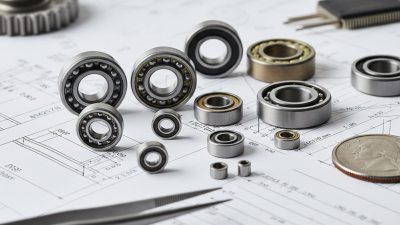
China Top 10 Ball Bearing 6202 Manufacturers Guide
Choosing the right Ball Bearing 6202 requires more than comparing prices or counting supplier listings. This compact deep-groove bearing appears in motors, pumps, conveyors, fans, agricultural equipment, and many industrial assemblies. Its common 15 mm bore, 35 mm outside diameter, and 11 mm width make it easy to specify. However, small differences can affect service life.
Bearing-life specialist Dr. Robert Errichello offered a practical warning: “Bearing life is governed by operating conditions, not labels.” That principle guides this China Top 10 Ball Bearing 6202 Manufacturers Guide. We examine manufacturers through measurable factors, including steel quality, raceway finishing, sealing design, lubrication control, radial clearance, load ratings, and inspection procedures. We also consider production capacity, export experience, certifications, packaging, technical support, and after-sales reliability.
Details matter. A bearing with rubber seals may resist dust near a conveyor, while an open version may suit an oil-lubricated gearbox. Excessive clearance can create vibration. Insufficient clearance can increase heat. Even accurate dimensions cannot guarantee performance when mounting is careless or lubrication is unsuitable.
The ranking is not absolute. Applications differ. A large factory may value stable monthly supply, while a repair distributor may prioritize flexible minimum orders. Some manufacturers present impressive catalog figures, yet provide limited testing evidence. That deserves reflection.
This guide compares ten leading Chinese manufacturers using practical purchasing criteria. It aims to help engineers, importers, maintenance teams, and distributors make defensible decisions. Verify current certificates and technical data before ordering. Real performance begins with application analysis, not marketing language.
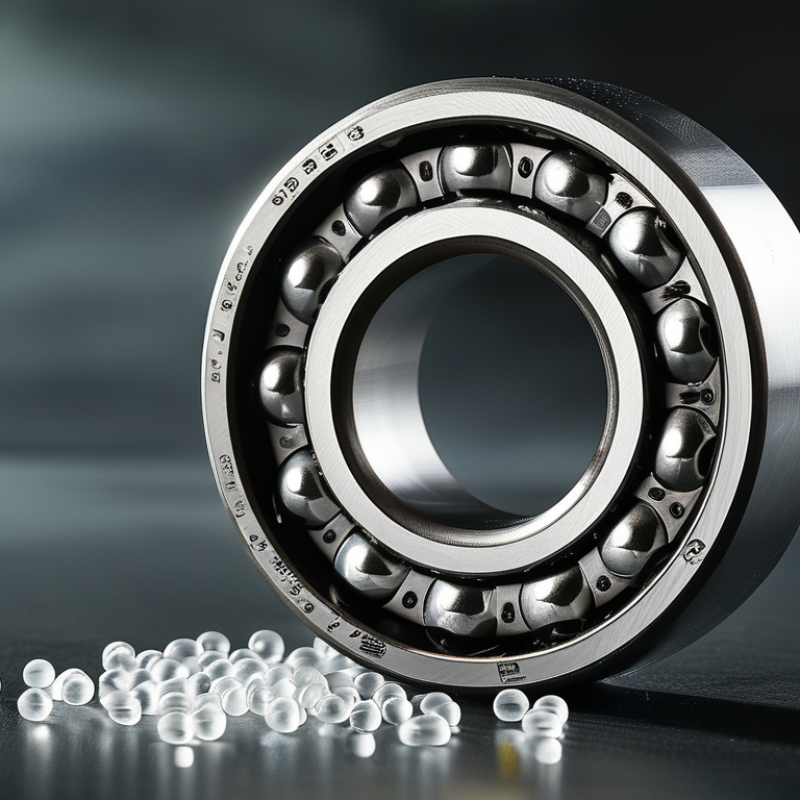
6202 Ball Bearing Specifications: 15 mm Bore, 35 mm OD, and 11 mm Width
A 6202 ball bearing has a 15 mm bore, 35 mm outside diameter, and 11 mm width. These dimensions suit compact motors, pumps, fans, and light industrial assemblies. The bearing’s deep-groove design supports radial loads and moderate axial loads in both directions. However, these figures describe the basic envelope, not the complete performance.
When comparing Chinese manufacturers, request dimensional tolerance data, radial internal clearance, material specifications, and heat-treatment records. Seal options can change friction, temperature behavior, and service life. Open versions are easier to lubricate, while sealed versions help resist dust and moisture. Precision grades also matter. A standard 6202 may perform well, but high-speed equipment often needs tighter control and better balance. Catalog language can look precise. It is not always enough. Ask for inspection reports and batch traceability.
Tips: Measure the shaft and housing before ordering. A 15 mm bore needs a clean, undamaged shaft surface. Check the 35 mm housing seat and allow the full 11 mm width. Do not force the bearing through the wrong ring. Use clean tools and compatible grease. A small alignment error can create noise, heat, and early wear. Also confirm whether the stated dimensions follow accepted bearing standards, because supplier descriptions sometimes omit tolerance details.
China’s Top 10 6202 Bearing Manufacturers by Capacity, Quality, and Export Reach
China’s top 10 6202 bearing manufacturers compete through capacity, process control, and export reliability.
Industry estimates from Grand View Research place the global ball-bearing market on a steady growth path through 2030, driven by automotive, machinery, and electric-motor demand. This trend rewards factories with automated grinding lines, heat-treatment monitoring, and stable steel sourcing. Scale matters. Consistent output matters more.
A practical comparison should examine monthly production, ISO 9001 systems, and ISO 281 fatigue-life calculations. The ten leading Chinese producers typically serve distributors across Asia, Europe, North America, and the Middle East. UN Comtrade data for HS 8482 shows China remains a major bearing exporter, supporting the sector’s broad international reach. However, export volume does not prove superior 6202 performance. Buyers should request batch records, noise readings, radial-clearance data, and sample inspection results.
Details reveal differences. A reliable 6202 bearing should rotate smoothly, show clean raceways, and arrive in moisture-resistant packaging. Factory audits can also check calibration labels and traceability codes. Public capacity figures are not always independently verified. That is a weakness. Some suppliers also emphasize price before service life, which can mislead maintenance teams. A careful ranking therefore weighs production capacity, defect control, delivery history, and technical response time together. Supplier performance should be reviewed again after real operating data becomes available.
6202 Bearing Materials: GCr15 Steel, 1,600 HV Hardness, and Sealing Options
China Top 10 Ball Bearing 6202 Manufacturers Guide
A 6202 bearing typically uses GCr15 high-carbon chromium steel for its rings and balls. This material supports strong fatigue resistance under rotating loads. Proper heat treatment usually produces about 60–64 HRC, roughly 700–800 HV. It helps the bearing resist dents, wear, and raceway deformation.
A claimed 1,600 HV hardness needs careful verification. That figure is not typical for untreated or conventionally hardened GCr15 bulk steel. It may describe a surface coating, a specific test method, or an incorrect product specification. Ask manufacturers for hardness location, testing standard, heat-treatment records, and batch inspection data. Small details matter. I would not accept a hardness number without its test conditions.
Sealing changes both protection and operating temperature. Open 6202 bearings suit clean, enclosed mechanisms with external lubrication control. ZZ versions use metal shields and reduce dust entry while allowing relatively low friction. 2RS versions use rubber seals, offering better resistance against moisture and fine contaminants. However, rubber contact seals can create more drag and heat. Seal material also matters near oil, solvents, or elevated temperatures. During supplier evaluation, check seal fit, grease filling, noise testing, radial clearance, and dimensional accuracy. A low-cost seal can look acceptable during inspection, then leak after repeated heating cycles.
Technical note: GCr15 is a high-carbon chromium bearing steel commonly hardened to approximately 700–850 HV, depending on heat treatment and measurement conditions. The approximately 1,600 HV level is associated with silicon nitride ceramic rolling elements rather than standard GCr15 steel.
Sealing options: 6202 bearings are commonly supplied as open, shielded, or contact-sealed designs. Open bearings provide the lowest sealing resistance but require external protection and lubrication control. Metal shields, commonly designated 2Z or ZZ, reduce contamination with low friction. Contact seals, commonly designated 2RS, provide stronger protection against dust and moisture but generally create more friction and heat.
Manufacturer Quality Metrics: ISO 9001, ABEC Grades, and P6/P5 Tolerances
China Top 10 Ball Bearing 6202 Manufacturers Guide
When comparing 6202 bearing manufacturers, ISO 9001 is a useful starting point. It shows that a factory operates a documented quality management system. However, it does not guarantee every bearing meets the same precision level. Auditors should check inspection records, calibration dates, and corrective action reports. A certificate can be real, yet production control may still vary between batches.
ABEC grades describe dimensional and running accuracy, not complete bearing performance. A higher ABEC grade does not automatically mean longer service life. Buyers should also examine steel cleanliness, heat treatment, noise levels, cage design, and grease selection. For a standard 6202 bearing, dimensional consistency matters during shaft and housing installation. Small deviations can create vibration, heat, or premature wear.
P6 and P5 tolerances follow stricter precision requirements, with P5 tighter than P6. These classes suit applications needing better rotation accuracy and reduced runout. Request actual measurement data, not only a printed tolerance claim. Useful records include bore variation, outside diameter, radial runout, and batch sampling methods. Some suppliers present impressive numbers but explain little about testing conditions. That weakness deserves attention. A factory that admits process limits may be more reliable than one offering perfect-sounding promises. Audits should compare certificates, laboratory equipment, and delivered samples before selecting a long-term supplier.
How to Compare China’s 6202 Suppliers: Load Ratings, MOQ, Lead Time, and Price
Comparing China’s 6202 suppliers requires more than checking a catalog price. Start with load ratings, including dynamic and static values, because similar-looking bearings may use different steel, clearance, or sealing designs. Ask for test reports, dimensional inspection records, and the applicable tolerance class. Confirm whether ratings are calculated consistently. They are not always presented clearly.
MOQ can change the real purchasing cost.
A supplier accepting 100 pieces may charge more per unit, while another requiring 5,000 pieces may offer better pricing but create excess inventory. Request prices at several quantities, such as 500, 2,000, and 10,000 units. Include packaging, tooling, sampling, and payment terms. Small details matter.
Lead time should be divided into sample production, mass production, and shipping preparation. Ask for a written schedule. A normal production window may still fail if raw material availability is uncertain. Check how the supplier handles rejected batches and replacement claims. Price deserves careful attention, too. The lowest quote may reflect thinner grease, weaker seals, or limited inspection. I have seen comparison sheets ignore these points. That was a mistake. A practical evaluation should score load performance, MOQ flexibility, delivery reliability, quality evidence, and total landed cost. Leave room for uncertainty. Suppliers may promise more than their records prove.