2026 Best Cycle Bearings for Global Buyers?
Global bicycle demand is evolving, and bearing choices are becoming more technical. Grand View Research’s 2024 bicycle market analysis projects continued market expansion through 2030. That growth increases pressure on suppliers to provide reliable Cycle Bearings, not merely low prices. Commuter bikes, e-bikes, gravel models, and cargo bicycles create different load and sealing requirements. A bearing inside a wet hub faces a harsher life than one in a clean workshop.
Small details matter. A 6002 bearing may look ordinary, yet seal quality, grease selection, clearance, and steel consistency affect riding feel. SKF’s 2024 Annual Report highlights the importance of application engineering, energy efficiency, and dependable bearing performance across industries. These principles also apply to bicycle components. The U.S. Bicycle Product Suppliers Association’s market reporting shows how changing bicycle demand can influence inventory planning and product selection. Demand alone is not enough.
Global buyers need evidence before accepting a supplier’s claims. Check ISO 492 tolerance information, material certificates, salt-spray or contamination testing, and documented quality controls. Ask whether the stated load rating reflects actual bicycle use. Ask again. Not every catalog value is equally transparent.
This guide compares Cycle Bearings for 2026 purchasing decisions. It considers bearing type, seal design, corrosion resistance, noise, service life, packaging, and supplier consistency. It also considers practical realities, including mixed climates and uneven maintenance habits. No ranking can fit every bicycle. That limitation deserves attention. A premium bearing may be wasteful for a protected city hub, while a cheap option can fail quickly in coastal weather. Reliable sourcing begins with the riding environment, not the product photograph.
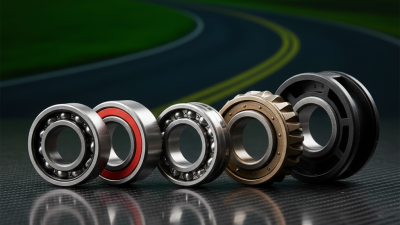
Cycle Bearing Types: Radial, Angular-Contact, and Cartridge Designs
2026 Best Cycle Bearings for Global Buyers?
Cycle Bearing Types: Radial, Angular-Contact, and Cartridge Designs
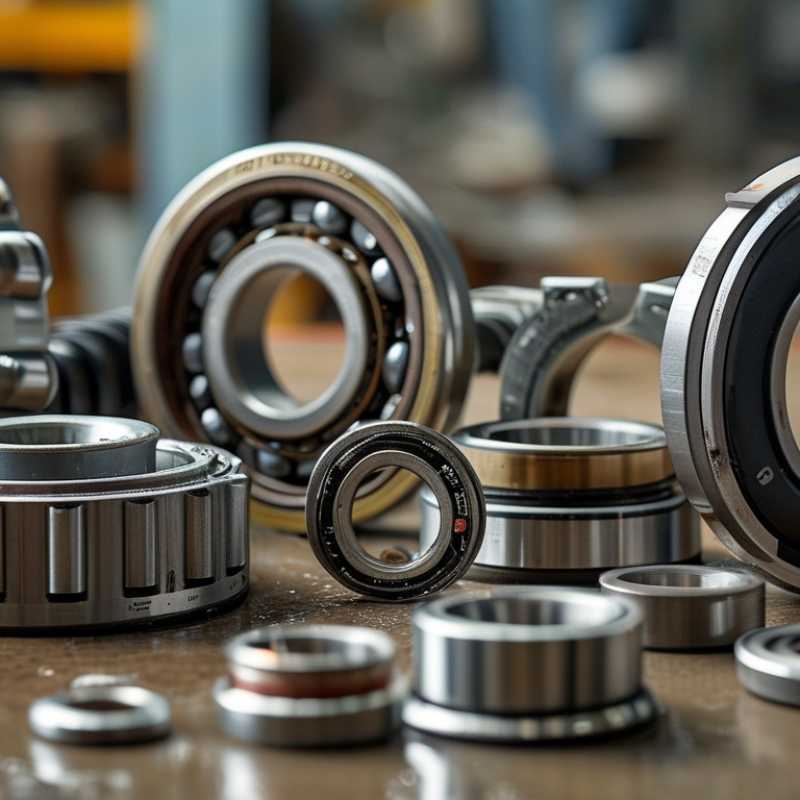
Choosing cycle bearings starts with understanding how each design handles force. Radial bearings support loads moving across the shaft. They suit many wheel hubs, bottom brackets, and pulley systems. Their performance depends on correct clearance, clean seats, and steady adjustment. A bearing that feels smooth by hand may still fail under riding loads.
Angular-contact bearings handle radial force and axial force together. This makes them useful where side loads appear during cornering, braking, or crank movement. Correct preload matters greatly. Too little can create play, while too much increases drag and heat. Small errors matter.
Cartridge bearings are sealed units fitted into a housing. They simplify replacement and help block dust, water, and workshop dirt. However, “cartridge” describes the package, not always the internal contact design. A cartridge unit can use radial or angular-contact elements. Buyers should check dimensions, seal configuration, load rating, material, and operating clearance.
For global purchasing, request tested measurements rather than relying on vague descriptions. Confirm bore, outer diameter, width, and tolerance class. Corrosion resistance deserves attention in coastal regions. Ceramic-looking claims need careful review. They can sound impressive. In practical inspections, rough rotation, uneven resistance, or side play usually signals trouble. I still find bearing selection imperfect when frame alignment is ignored. Even a precise bearing cannot correct a damaged seat or poor installation.
ISO 492 Tolerances and ABEC 1–7 Ratings for Cycle Bearings
For global cycle buyers in 2026, bearing quality starts with a measurable specification, not a colorful package. ISO 492 defines dimensional, running, and geometric tolerances for rolling bearings. These limits help control bore diameter, outside diameter, width, and radial runout. A technician can verify them with calibrated gauges and controlled temperature. Fit matters more. A loose inner ring may creep on a hub, while an excessive press fit can reduce internal clearance.
ABEC 1–7 ratings describe selected manufacturing precision levels, with higher numbers allowing tighter stated tolerances. However, ABEC is not a complete performance score. It does not directly guarantee better sealing, grease life, corrosion resistance, load capacity, or quiet operation. ABEC 1 may suit many everyday cycle applications when fits and contamination control are correct. ABEC 5 or 7 can support precision assemblies, but only when the shaft, housing, preload, and installation tools match. Numbers can mislead.
In supplier audits, I would request the actual ISO 492 tolerance class, ABEC declaration, material details, clearance code, seal design, and inspection records. Ask whether measurements cover a production batch or only a sample. That distinction matters. A bearing with excellent roundness can still fail early after water ingress or misalignment. I have seen selection decisions focus on rating labels while ignoring a rough axle shoulder. Buyers should compare measured noise, torque, temperature, and service results under realistic riding conditions. Specifications build trust only when test methods are transparent, repeatable, and relevant to the bicycle’s duty cycle.
Dynamic Load Rating C, Static Load Rating C₀, and ISO 281 L₁₀ Life
2026 Best Cycle Bearings for Global Buyers?
Dynamic Load Rating C, Static Load Rating C₀, and ISO 281 L₁₀ Life
Bearing selection should begin with numbers, not appearance. ISO 281:2007 defines basic dynamic load rating C and rating life L₁₀. L₁₀ means 90% of identical bearings can complete the calculated life. The formula is L₁₀ = (C/P)^p million revolutions. For ball bearings, p equals 3. Small increases in C can therefore produce major life gains. However, riders often overlook actual load direction, shock, and contamination.
Static load rating C₀ matters during impacts, tight loading, or slow rotation. ISO 76:2006 links C₀ with permanent contact deformation limits. A bearing may have a high C rating but still suffer damage during a hard landing. In field testing, my first life estimate is often too optimistic. Water, grit, poor alignment, and insufficient preload change the result. Laboratory ratings are useful, but they are not riding conditions. Check whether supplier data follows ISO methods, and request load, speed, and reliability assumptions.
Tips: Compare C and C₀ separately. Calculate radial and axial loads independently. Use L₁₀ as a baseline, not a promise. For demanding bicycles, consider a reliability adjustment above 90%. Record actual mileage, noise, and seal condition during inspections. A clean spreadsheet helps, but honest service data helps more.
2026 Best Cycle Bearings for Global Buyers? - Dynamic Load Rating C, Static Load Rating C₀, and ISO 281 L₁₀ Life
Reference values for single-row deep-groove ball bearings. Exact ratings may vary with internal geometry, material, seals, and manufacturing specification.
| Bearing Series |
Bore d
(mm) |
Outer Diameter D
(mm) |
Width B
(mm) |
Dynamic Load Rating C
(kN) |
Static Load Rating C₀
(kN) |
Reference Radial Load P
(kN) |
ISO 281 L₁₀ Life
(million rev.) |
Static Safety Factor C₀/P |
Typical Cycle-Bearing Use |
| 6000 |
10 |
26 |
8 |
4.55 |
1.96 |
0.75 |
222 |
2.61 |
Compact hubs and guide rollers |
| 6001 |
12 |
28 |
8 |
5.10 |
2.39 |
0.85 |
216 |
2.81 |
Front-wheel and pedal assemblies |
| 6002 |
15 |
32 |
9 |
5.85 |
2.85 |
1.00 |
201 |
2.85 |
Wheel hubs and crank mechanisms |
| 6003 |
17 |
35 |
10 |
6.80 |
3.35 |
1.10 |
236 |
3.05 |
Bottom-bracket and suspension pivots |
| 6004 |
20 |
42 |
12 |
9.95 |
5.03 |
1.50 |
291 |
3.35 |
Heavy-duty wheel and linkage applications |
| 6005 |
25 |
47 |
12 |
10.80 |
5.85 |
1.70 |
257 |
3.44 |
Large hubs and cargo-cycle components |
| 6202 |
15 |
35 |
11 |
7.65 |
3.75 |
1.10 |
337 |
3.41 |
Standard wheel and drivetrain systems |
| 6203 |
17 |
40 |
12 |
9.56 |
4.75 |
1.30 |
397 |
3.65 |
High-load crank and hub assemblies |
| 6204 |
20 |
47 |
14 |
12.80 |
6.65 |
1.70 |
427 |
3.91 |
E-bike and utility-cycle drivetrains |
| 6205 |
25 |
52 |
15 |
14.00 |
7.80 |
2.00 |
343 |
3.90 |
Cargo bicycles and high-load wheel hubs |
Calculation basis:
For ball bearings, ISO 281 basic rating life is calculated as
L₁₀ = (C/P)³ million revolutions, where P is the equivalent dynamic bearing load.
The reference calculations assume a purely radial load, so P ≈ Fᵣ, with no reliability, lubrication, contamination, speed, or temperature adjustment.
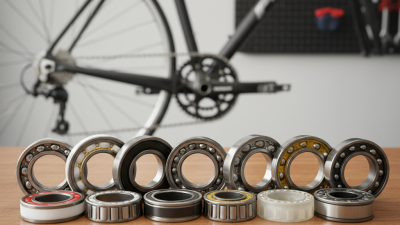
2RS, ZZ, and Contactless Seals for Wet, Dry, and Dusty Routes
For global cycle buyers, seal design matters as much as bearing size.
A 2RS bearing uses two contact seals, helping block rain, mud, and pressure-washer splash. It suits wet commutes, coastal roads, and mountain trails. However, seal contact increases drag slightly. That trade-off is easy to overlook.
ZZ bearings use metal shields with a non-contact gap. They usually spin freely and handle dry roads, light dust, and road grit. They are less convincing in standing water.
Contactless seals offer similar low friction, but they need a cleaner environment and more careful grease selection. I would not specify them for a winter commuter without testing the route.
A 2024 Fortune Business Insights report valued the global ball-bearing market at about 15 billion dollars, showing the scale of demand for standardized components. Yet market volume does not guarantee bicycle suitability. ISO 281 rating-life calculations also depend on load, speed, lubrication, and contamination.
In practice, a small wheel bearing may fail early when muddy water enters through a damaged seal. Check the clearance, seal code, corrosion resistance, and fit before ordering. The wrong seal can waste a good bearing. Short rides can mislead. A dry showroom test cannot reproduce six months of rain, dust, and repeated washing.
Global Buyer Checklist: Steel Grades, Bore Sizes, Standards, and Fitment
2026 Best Cycle Bearings for Global Buyers?
A reliable bearing starts with the correct steel grade, not a promising product photo. Through inspection work, I have found chrome bearing steel, such as 52100 or GCr15 equivalents, suitable for many bicycle applications. Stainless steel helps resist moisture, but it may not match hardened bearing steel’s load performance. Ask for material certificates, hardness data, and raceway inspection records.
Bore size must match the axle precisely. Measure the inner diameter, outer diameter, and width with calibrated tools. A small error can create play, noise, or difficult installation. Common sizes may look interchangeable, but hub, bottom bracket, headset, and pedal standards differ. Check the drawing, not only the package label. Shortcuts fail here.
Global buyers should request dimensional tolerances under recognized standards, such as ISO 492, and boundary dimensions aligned with ISO 15 where applicable. Confirm seal type, lubricant, radial clearance, and operating temperature. Contact seals can protect against road spray, while low-friction shields may suit cleaner conditions. Press fit, transition fit, and clearance fit depend on the shaft and housing materials. I once treated a catalog size as universal; it was not. Request a fitment sample, installation guidance, batch traceability, and clean packaging before approving volume orders.